Showing posts with label macro photography. Show all posts

Thursday, July 23, 2009

Fish-Eye Reflections


Click image to view at 1000 pixels wide

Christmas trees can be very hard to photograph. For their lights to be seen at their best the ambient illumination should be low, and flash pretty much defies the object of the lights. You can snap away for ages before you get a decent shot, and this macro closeup is delightfully sharp. The red orb is a perfect spherical mirror in which the camera itself can be seen, along with the photographer. Sharpened only. Fuji FinePix S5600, automatic. Image by Mike.

Monday, July 13, 2009

Focus on a Stem


Click image to view at 1000 pixels wide

Here is a trick easy with a manual SLR but infuriatingly difficult with a full auto system: focusing on a wispy, insubstantial subject rather than the material further away filling the rest of the frame. With a manual, crank the focus ring until you have what you want, nothing could be simpler, but with an autofocus system it's often pot-luck as to precisely where in your composition focus will fall. As with the aircraft shot published recently, the chip has here successfully chosen the foreground object as the focal target, creating that wonderfully 'arty' feel, as the soft focus de-emphasises the background. This shot was taken in the rainforest garden at Flinders Medical Centre, south of Adelaide, in December, 2007, and was sharpened and colour- and contrast-balanced. Fuji FinePix S5600, automatic. Image by Mike.

Tuesday, May 5, 2009

Wild Mushrooms


Click image to view at 1000 pixels wide

Nature has a way of changing from moment to moment, things appear and disappear, and to capture the ephemeral is part of the gift of photography. I was wandering the trails of Loftier Gardens with friends in April, 2009, when we came across a patch of wild mushrooms, these spectacular red and white growths, inches across, and the afternoon sun and leaf litter created wonderfully photogenic conditions. This was a macro-setting shot from a distance of a couple of inches, in natural daylight, and enhancements are a 5% sharpening plus an extra dash of colour. Fuji FinePix S5600, automatic. Image by Mike.

Sunday, April 19, 2009

Super-Macro Magic

super-macro
Click here to view at 1000 pixels wide.

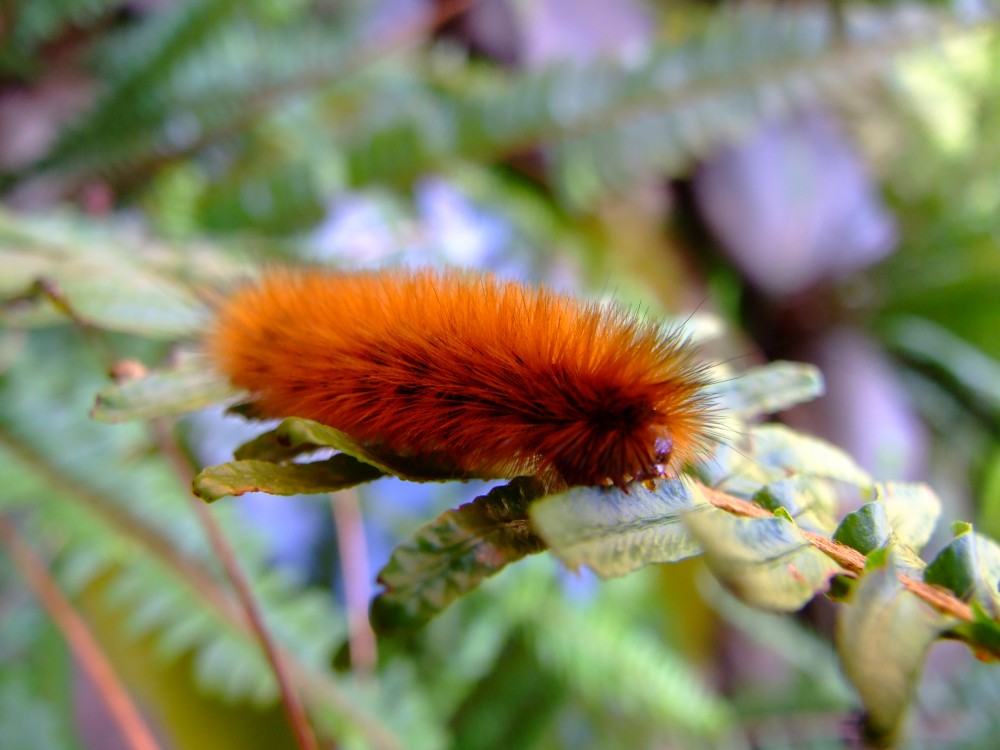
Super-macro is one of the neatest features of the Fuji FinePix ... also one of the hardest to handle. You're photographing objects that are so small, the caterpillar in this shot is depicted at 300% life size! The slightest movement either of your hand, the camera or the subject, and you get OOFF, which is an acronym for the technical term "Out Of Focus Fuzzies." And what's worse it, there's no simple trick to cure the OOFFs. Auto focus or manual focus, makes very little difference. It comes down to two things: 1) steady hands, and 2) a very, very still subject. There is a trick, however, that professional photographers have used for eons, when photographing tiny wildlife such as ants. Capture them, and a stick, leaf, whatever. Put the whole lot in a jar ... put it in the fridge for a couple of hours. Insects slow way down when they're cold. The ants will stop running and will seem to strike a pose! There: National Geographic shots. Easy, wasn't it?! Photo by Mel, 2007.

Saturday, April 18, 2009

Macro magic

dew
Click here to view at 1000 pixels wide.

A shower of rain refreshes the greenery in the forge at Morialta, and water-starved plans take it up eagerly. Macro shots like this fascinate me, reminding me of the line in the poem by Blake, To see a world in a grain of sand, And a heaven in a wild flower, Hold infinity in the palm of your hand, And eternity in an hour." Beautiful words. The only knack with this shot is focus. It's absolutely critical to know where you're focusing, and to make the camera agree with you. The Fuju Finepix has a tremendously good Macro setting. The SuperMacro is much trickier, and there's an element of luck, but with plain old Macro ad a steady pair of hands, it's hard to go wrong! Photo by Mel, 2006.

Thursday, April 2, 2009

True Antiquity


Click image to view at 800 pixels wide

It's not often you get to focus on a manmade object that is some 14000 years old. This is a carved antler artifact from late Palaeolithic times which I had the privilege of actually touching at a touch-and-tell exhibit at the British Museum in December, 2006. It i's humbling to think that human hands shaped this piece of organic material and carved in the decoration long before the world as we know it began to take form. The photograph was taken in available light on macrofocus setting, and was simply a case of framing the composition and releasing the shutter: photographically it was a no-brainer, but to see the object is to feel the gulf of time between the maker and the beholder, and it demanded to be recorded. Sharpened and colour-enhanced for publication; Fuji FinePix S5600, automatic exposure, macro range. Image by Mike.

Wednesday, February 4, 2009

Such fragile beauty

hibiscus-01
Click here to view the whole image at 1000 pixels wide.

Very occasionally a wonderful photo presents itself as you walk out your front door. There's a hibiscus bush growning there, and when the sun is at just the right angle the results are ... superb. This photo was taken just outside the macro range. The Fuji 6500 is versatile enough to get right in on the flower without resorting to the macro and super-macro settings. This shot also it's cropped at all -- you're looking at the full frame. I adjusted it for brightess and contrast, otherwise you're seeing the shot just as it was taken. Photo by Jade, 2007.

Monday, February 2, 2009

Mirror, Mirror On The Wall

moth reflecting closeup


A few weeks ago I was cleaning the outside windows. As I was about to start this window I noticed what I thought was a big hunk of dirt on the window frame. Upon closer inspection I saw that it was a moth on the wooden frame right up against the glass making a nice reflection. The fact that it landed next to a nail head made it look really cool. Went inside and grabbed the trusty Fuji S6500fd, set it to macro with auto focus and got this shot from two inches away. Didn't have to do anything to the pic, it came out perfectly just like the moth looked like in real life. I thought about trying the super-macro setting, but I didn't want to disturb by getting any closer. Needless to say, I didn't wash that particular window that day. Photo by dave.

Tuesday, January 27, 2009

Stop and smell the flowers

wildflowers-red
Click here to view the whole image at full size.

October downunder: springtime, warm and bright, but not yet so hot that the landscape is parched and burned out. Everything is green as Ireland, and this is the time when wildflowers carpet the woods with delicate blooms like this one, above. Scores of different kinds of flowers seduce photographers into the forest, but like wild blooms anywhere, they can be extremely small. You'll be on the macro setting, and if you want really great results, get a firm handle on your manual focus. The tricks? Patience; good eyes, to pick the right flower; steady hands to hold focus in the macro range. Digital cameras are a godsend; you can botch forty shots, erase them fast before anyone else sees them, and come back with perfect photos -- all at no cost! Photo by Jade, 2007.

Monday, January 26, 2009

Beachcombing

shell
Click here to view the full image.

Macro photography offers a whole new world. This image is right on the edge of what I'd be calling macro, and one of the things I like about it is the polarized sunflare off the bottom of the shell. That's not a digital effect -- it's actually there in the raw picture. The real trick to this kind of work is keeping your eyes open. There are thousands of shots at your fingertips, if you only saw them. I tend to miss most! The other tricks are purely mechanical. Know how to handle your camera on macro and super-macro ... and know how to handle your software, to enhance the image once you've cropped out exactly what you want. This picture was captured "on the fly" in 2006, with warm sea water lapping around my bare feet. Just be sure you don't drop the camera! Digital cameras are not as easy to repair as the old optical cameras. Photo by Mel, 2006.

Friday, January 23, 2009

A snapshot of prehistory

trilobite
(You're viewing this image at full size.)

This was an exercise in steady hands -- the light conditions were very low -- and, later, in digital enhancement. The trilobite lives at the Adelaide Natural History Museum, and as with all museums, the light is dim. Photography is allowed, so long as flash is not used and the images are not intended for commercial use -- as in, publication (meaning, books, magazines. I can't imagine why a museum would have a problem with a picture being blogged). The film speed on the Fuji 6500 was set at about 800, and still the shutter speed was looooong. The fossil is also quite small; you're on the borderline of macro photography here. The trick was to hold the camera extremely steady. Later, I adjusted the image for contrast and color saturation, and the result is striking. The fossil is going to be something like 300 million years old -- all the trilobites perished in the great extinction 250 million years ago. This one is beautifully preserved. Photo by Jade, 2008.

Sunday, January 18, 2009

In the bee-loud glade...

bee-in-orange (You are viewing this image at full size)

We'd just pulled into a carpark (parking lot, if you prefer) somewhere in the countryside. From memory, I think we were going to buy fruit -- it was one of those places where you pick your own. They give you a bucket, point you at the orchard, and weigh your haul when you get back down the hill. So: turn off the engine, open the door ... and the silence is counterpointed by the drone of bees. You've heard the line in the poem, about "the bee-loud glade" --? This was it. There must have been a thousand of them, working over a bright-orange native shrub, and these insects were so focused on their work, they didn't care when a human brought a camera within inches of them. It would have been one of the Fujis ... I suspect it was the FinePix S6500fd. The setting would have been Macro, and it could easily have been manual focus, though the automatics do a fine job on this kind of work. Photo by Jade, 2007.

Tuesday, January 6, 2009

Don't Worry, Bee Happy...

cute bee


This is a honey bee starting to load up with pollen from a Pacific Blue bush -- photographed in the backyard in excellent lighting conditions. The bee completely ignored me. The camera was set on macro, and I was about an inch and a half away from it! Fuji FinePix S6500fd, on auto focus. The camera performs amazingly well in the macro range; experiments are processing in the super-macro range! This one was captured by Dave.