Showing posts with label digital cameras. Show all posts

Sunday, April 19, 2009

Super-Macro Magic

super-macro
Click here to view at 1000 pixels wide.

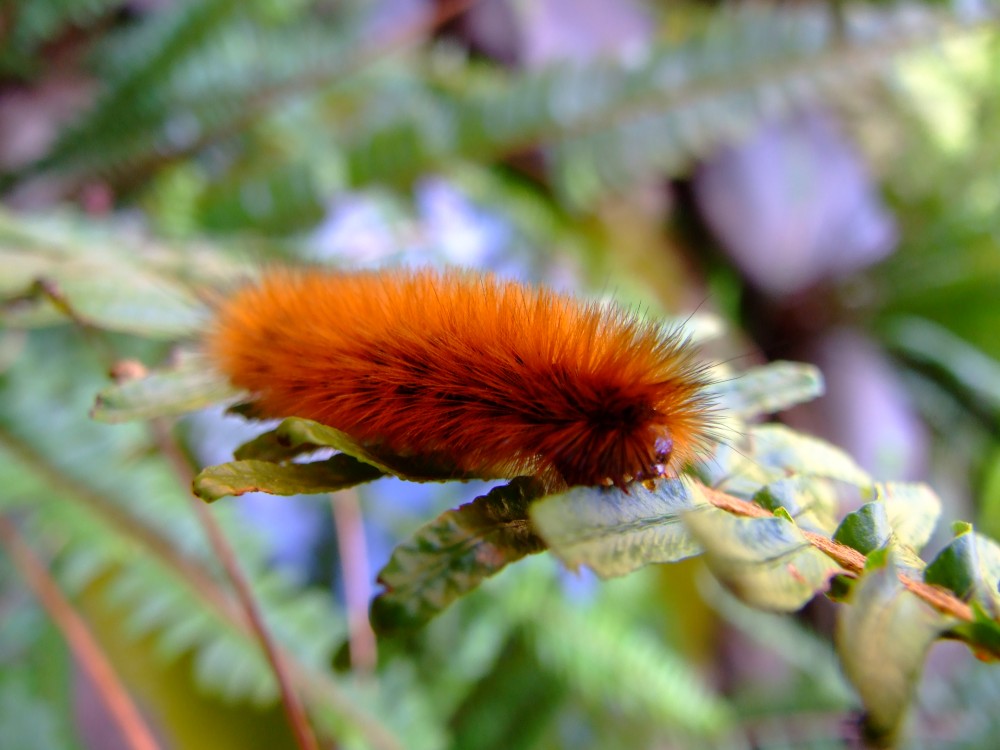
Super-macro is one of the neatest features of the Fuji FinePix ... also one of the hardest to handle. You're photographing objects that are so small, the caterpillar in this shot is depicted at 300% life size! The slightest movement either of your hand, the camera or the subject, and you get OOFF, which is an acronym for the technical term "Out Of Focus Fuzzies." And what's worse it, there's no simple trick to cure the OOFFs. Auto focus or manual focus, makes very little difference. It comes down to two things: 1) steady hands, and 2) a very, very still subject. There is a trick, however, that professional photographers have used for eons, when photographing tiny wildlife such as ants. Capture them, and a stick, leaf, whatever. Put the whole lot in a jar ... put it in the fridge for a couple of hours. Insects slow way down when they're cold. The ants will stop running and will seem to strike a pose! There: National Geographic shots. Easy, wasn't it?! Photo by Mel, 2007.

Friday, April 3, 2009

Fossils, front and center!

paleontology-week
Click here to view at 1000 pixels wide.

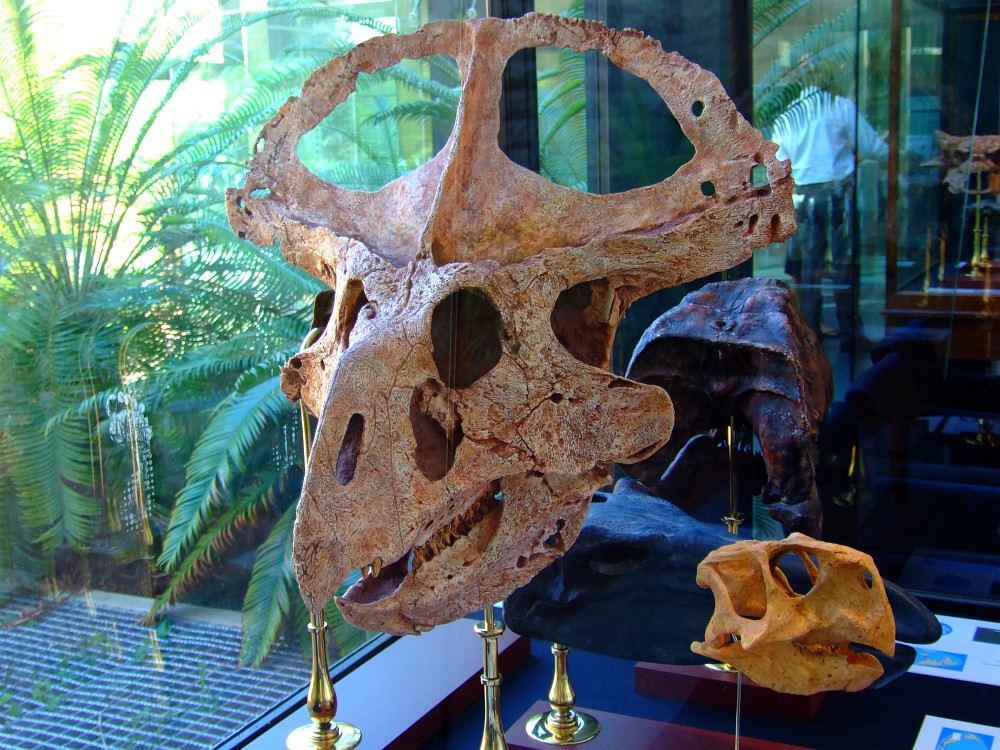
Palaeontology week at the South Australian Museum of Natural History offered some fantastic opportunities to pit oneself against a slippery opponent: glass. The exhibits are all behind (or under) glass, of course ... and it's daylight, which means that trying to get a good photo of an amazing fossil entails finding some way to get the "glare" out of the shot! You can find yourself taking an excellent portrait -- of the photographer, reflected in the glass. There's no real trick to it, but there's a few guidelines to follow, if you're wondering how in the world to get a usable shot. First: observe. Use your eyes. Don't let your brain merely "tune out" the reflections -- see them! Second: use your feet and knees. Move around and duck down, till the reflections are either minimal, or gone. The camera might try to focus on the glass itself, so be vigilant ... make sure it focuses where you want it to. Lastly, the light levels will be low, so set your virtual film speed at 800 or higher, if you're working in Manual mode; and if you're working in Auto mode, take a great number of shots till the camera gives you exactly what you want -- and erase the dross! Photo by Mel, 2009. (Palaeontology Week, late March 2009; in the foyer of the SA Museum. The major skull in the case is Protoceratops.)

Saturday, February 21, 2009

Days of steam remembered

days-of-steam
Click here to view the entire picture at 1000 pixels wide.

Fifty years ago, this train was a major workhorse -- "iron horse!" -- in the Barossa region of South Australia. Today, engine 217 stands in a park (from memory, it's in Tanunda) as a monument to the trains and the men who ran them. This was an easy shot to frame, but it was the exposure from hell: the noon light was so bright, it hurt your eyes and confused the camera, and making it even harder was the fact I was photographing a black object that was glaring with reflection. This was one of those occasions when you didn't trust the camera's automatics, but went to the manual exposure controls. No matter what kind of camera you're using, you need to master this skill. Photo by Mel, 2006.

Sunday, February 8, 2009

Like a fire in the sky

sunset-clouds-02
Click here to view the whole image at 1000 pixels wide.

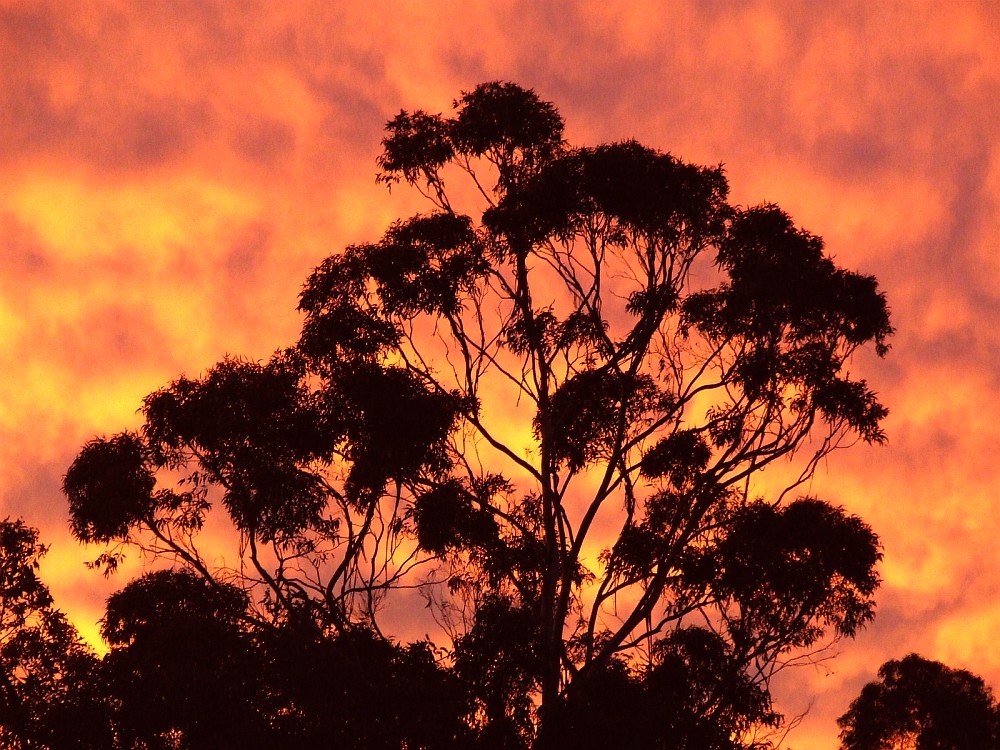
My brother said, "Grab the camera and get outside, NOW!" He'd seen this sunset brightening, shade by shade, and he knew how I love to capture sunset shots. I started doing this kind of work in optical cameras, and the switch to digital was not so easy. The digitals love to "correct" your exposure, if/when you leave them on their automatic settings ... and your sunset colors (or other effects) vanish. They just switch right back to normal, ordinary shots that look, well, blah. You need to find the manual (M) settings, and learn how to adjust shutter speeds and apertures. These may be "virtual" on digital cameras, but the settings are shere; you just need to find them! The colors really looked like this. All I had to do was trim the shot to get the edge of a roof out of it, and then resize it. Photo by Jade, 2006.

Monday, February 2, 2009

How the other half live ... wow!

panorama-02
Click here to see the whole panorama at 1000 pixels wide.

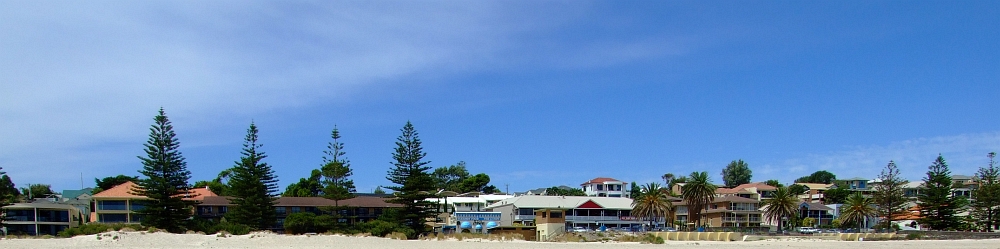
I got interested in panoramic shots a while ago, while traveling overseas. Some locations offer the most amazing mid-range material, while the top and bottom of the frame are ... blah. Like this one. It's the line of millionaires' houses and Norfolk Island pine trees that are the interesting segment of the photo. The upper third is just sky, and the bottom third --? I was standing in the water to get this, so you can imagine what the bottom third was all about. The best thing to do is photograph the whole scene at the max resolution you have ... 6MP is just fine; 10MP is superb, but you'll need one of the newer cameras to get this. (Incidentally, check the Digital Kosmos Store, to the right of your screen: you'll see the new Fuji at a good price -- and it would do this job perfectly.) However, this shot was captured with 6MP, and I don't have a problem with it. In your imaging software, just crop the wide shot out of the whole frame, then size it to what you need, sharpen, and adjust color, brightness, contrast and color saturation, if you need to or want to. The results? Beautiful! This photo was taken from the waterline at Seacliff, Adelaide. Photo by Jade, 2007.

Sunday, February 1, 2009

Sand, sea and sun -- Aussie style

day-at-the-beach
Click here to view the whole image at 800 pixels wide.

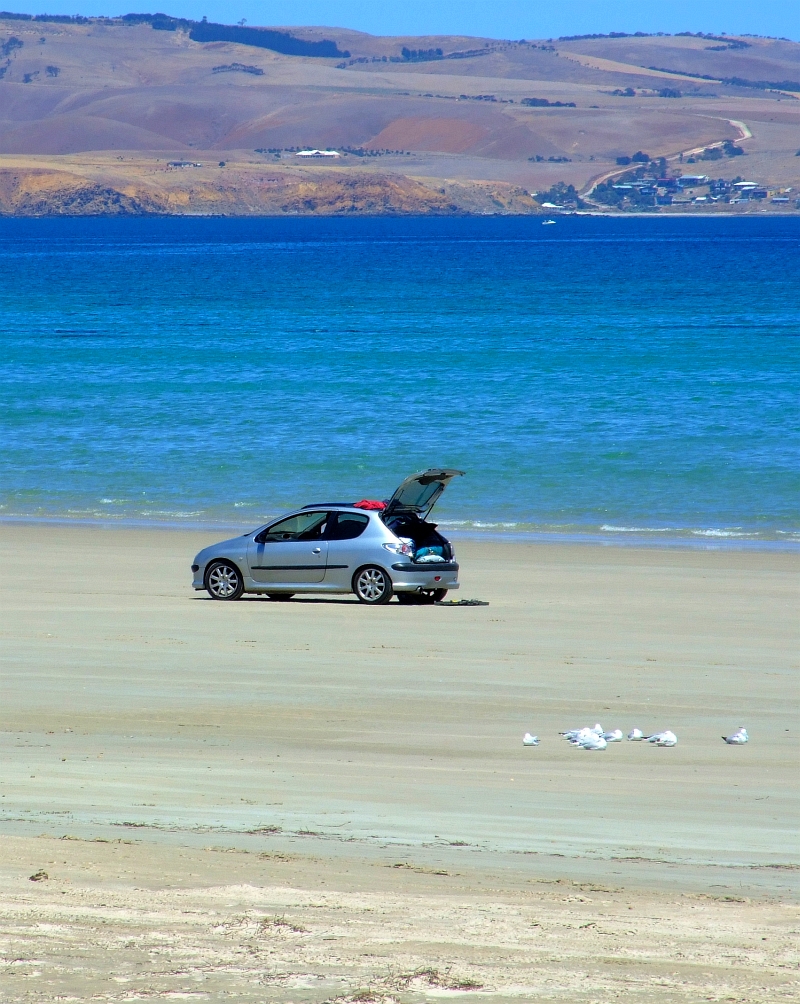
There's nothing like it: you're the only human soul in twenty miles, with a white beach the size of the county of Hampshire all to yourself. The sky is a blue beyond description, the sea is still as a pond. Put a line in the water to catch dinner, get the tents pitched, kick back and enjoy. It's Silver Sands, near Aldinga, South Australia ... where else? We were down there for a couple of days, and right on cue the weather turned blisteringly hot. No surprise, in Australia in the summer! The toughest part of capturing this picture was keeping the contrast under control. The digital camera wanted to turn the beach white as bleached bone. The only trick is -- learn to handle your camera's manual settings for apperture, shutterspeed and exposure. All good cameras have these functions ... hit the manual! Photo by Mel, 2006.

Wednesday, January 28, 2009

The gate guard

Click on the image to view at full size.

About halfway up Shepherd's Hill Road, this lion is guarding a gate. He's only around a foot high, and he's been there a long time. I love heraldry, and this guy really appeals. Normally you're driving past too fast to notice him, but this particular day we parked opposite for some reason ... something to do with a truck, I believe! ... and I grabbed my chance, without having the opportunity to get out of the car. This is an extreme telephoto shot, and enhanced a little to give it contrast because the raw image is a little faded by the sheer distance involved. 10:1 optical zoom on the Fuji 6500. Photo by Jade, 2007.

Heavenly shades of evening

(Click on the picture to view at 1000 pixels wide.)

You know the old song lyric, "Heavenly shades of night are falling, it's twilight time..." This picture embodies those words. It was a glorious evening, cool and calm, ahead of a change in the weather. It's that change you're looking at coming up here, with the clouds at just the right altitude to catch the light from a sun that was already down. The picture has been cropped to cut out a/c units and chimneys, and a phone wire; but the colors have only been "tweaked" a little, to make the digital photo reflect the actual evening. The toughest thing about getting these shots with a digital camera is convincing the onboard computer not to adjust the exposure. Good cameras have a "normal" setting which offers WYSIWYG -- "what you see is what you get." Photo by Mel, 2006.

Tuesday, January 27, 2009

Stop and smell the flowers

wildflowers-red
Click here to view the whole image at full size.

October downunder: springtime, warm and bright, but not yet so hot that the landscape is parched and burned out. Everything is green as Ireland, and this is the time when wildflowers carpet the woods with delicate blooms like this one, above. Scores of different kinds of flowers seduce photographers into the forest, but like wild blooms anywhere, they can be extremely small. You'll be on the macro setting, and if you want really great results, get a firm handle on your manual focus. The tricks? Patience; good eyes, to pick the right flower; steady hands to hold focus in the macro range. Digital cameras are a godsend; you can botch forty shots, erase them fast before anyone else sees them, and come back with perfect photos -- all at no cost! Photo by Jade, 2007.

Monday, January 26, 2009

Beachcombing

shell
Click here to view the full image.

Macro photography offers a whole new world. This image is right on the edge of what I'd be calling macro, and one of the things I like about it is the polarized sunflare off the bottom of the shell. That's not a digital effect -- it's actually there in the raw picture. The real trick to this kind of work is keeping your eyes open. There are thousands of shots at your fingertips, if you only saw them. I tend to miss most! The other tricks are purely mechanical. Know how to handle your camera on macro and super-macro ... and know how to handle your software, to enhance the image once you've cropped out exactly what you want. This picture was captured "on the fly" in 2006, with warm sea water lapping around my bare feet. Just be sure you don't drop the camera! Digital cameras are not as easy to repair as the old optical cameras. Photo by Mel, 2006.

Friday, January 23, 2009

A snapshot of prehistory

trilobite
(You're viewing this image at full size.)

This was an exercise in steady hands -- the light conditions were very low -- and, later, in digital enhancement. The trilobite lives at the Adelaide Natural History Museum, and as with all museums, the light is dim. Photography is allowed, so long as flash is not used and the images are not intended for commercial use -- as in, publication (meaning, books, magazines. I can't imagine why a museum would have a problem with a picture being blogged). The film speed on the Fuji 6500 was set at about 800, and still the shutter speed was looooong. The fossil is also quite small; you're on the borderline of macro photography here. The trick was to hold the camera extremely steady. Later, I adjusted the image for contrast and color saturation, and the result is striking. The fossil is going to be something like 300 million years old -- all the trilobites perished in the great extinction 250 million years ago. This one is beautifully preserved. Photo by Jade, 2008.

Thursday, January 15, 2009

On the inside, looking out

inside-looking-out
Click here to view at 1000 pixels wide.

We're back at Grant Burge estates, the winery in the Barossa ... I've uploaded two shots already from this shoot, and here's the third which should put the whole thing in perspective. See Life Meets Art... and also Symmetry, and you'll have the whole picture! The first shot was taken in, and features, the inside of the courtyard, under the vines -- sheltering from ferocious heat. The second shot was captured out in the gardens, looking back at the astonishing symmetry of the architecture. This shot is looking out into those gardens from the high, arched -- glassless -- windows you saw in picture two. The exposure was tricky: the challenge was to make a digital camera give you the aperture and shutter speed you need to correctly expose the outside, not the inside! (As I've said before, a little theory of photography goes a long way indeed.) The camera was one of the Fujis. I think, probably the 5500. Photo by Jade, 2007.

Saturday, January 10, 2009

Lorikeets: breakfast for two, please!

Click on the pic to view at large size.

Every morning, flocks of Australian parrots show up for breakfast at my bird feeders. I get cockatoos, lorikeets, galahs, little corellas, the occasional long billed corella ... plus the usual turtle doves, native crested pigeons, magpie larks, honey eaters, wattle birds, sometimes a wagtail, and a couple of kind of ducks will make a splashdown in the pool. The morning light is a great opportunity for picture-taking, and lorikeets are so photogenic. They're so colorful. You need to be quick with the camera, and digital cameras don't do this kind of photography so well on automatics. You're better off if you go to manual exposure and manual focus. The shot above was pre-focused on the swinging feeder, and to get the perfect exposure on the birds, a few test-frames were taken. You need a fast shutter speed to capture these little buggers: they're quick and they don't stay still for long! Photo by Dave, 2008.

The church of many cockatoos

Strathalbyn-church
Click here to view at 1000 pixels wide.

Church architecture is the same, the world over. Australia was colonized by people from every part of the British Isles. They brought so many things with them -- plants, animals, fashions in clothing and architecture -- that sometimes, in South Australia, you could almost think you were in an English village. Almost. This church is in the country town of Strathalbyn, and is so familiar, with its square tower ... but you know you're not in England. See the big white birds sitting on the gate and in the tree at lower left of the shot? Cockatoos. Thousands of these parrots nest in Strathalbyn, along the river which runs through the park in the middle of the town. Conditions on this day in 2007 were very dim; temperature was ambient to cool, with an thick overcast. This made it difficult to get good, sharp pictures, since apertures were large and shutter speeds correspondingly long. (A little photographic theory goes a long way, and most of what you learned in optical photography is applicable to digital cameras!) Photo by Jade, 2007.

Friday, January 9, 2009

Lord of all he surveys

bagheera-the-panther

In every world there is a perfect (purrrrfect?) cat -- or there should be! -- and this would be him. He has the look of a Bombay, but he was rescued from the RSPCA, so his origins are unknown. His name is Bagheera ... the black panther from The Jungle Book. The morning was hot and very bright; the camera's automatics handled the shot perfectly, and there has been no tweaking on it -- just a little cropping. Photo by Dave, using the Fuji Finepix S6500fd.

The Greek islands? Looks are deceiving!

not-the-greek-islands
Click to view at 1000 pixels wide.

It has to be Corfu, or Crete, or one of the other Greek islands, right? You're in for a surprise! It's looking south from the Noarlunga foreshore ... Noarlunga is one of the "outer metropolitan" suburbs of Adelaide, South Australia! The day was blisteringly hot, but there was a breeze off the sea, just enough moving air to move a sailboat. Conditions were very bright -- excellent for photography, if you take charge of the exposure. Digital cameras can confuse themselves in extremely bright conditions, so the 'M' setting is a godsend. Photo by Mel, 2007.