Showing posts with label digital photography. Show all posts

Monday, April 13, 2009

Summer at Myponga

myponga-reservoir
Click here to view at 1000 pixels wide.

A summer's day at Myponga Reservoir ... a very simple shot to capture, difficult to actually do anything with, because what the viewer doesn't realize is that the full frame is something of a disaster! There's a rubbish bin at bottom right and a dilapidated bench at bottom left. There's graffiti just out of the frame to the right, and the tree in the foreground is broken away, just out of the frame at the top! The public loo is just out of frame to the left ... all of which makes this image an exercise in cropping. Shooting at 5MP or more, you'll get a picture which is big enough to get in there and crop out the useful part, and discard the rest. A little enhancement of color and sharpness, and you're done! Photo by Mel, 2007.

Monday, April 6, 2009

Cafe culture goes way upmarket

national-wine-centre
Click here to view entire image at 1000 pixels wide

Low-light photography offers a whole suite of challenges in either optical or digital, and your solutions to these tests might be different on different days (or shoots). It all depends what results you want: the pro might want a tack-sharp image without grain, because s/he is more than likely shooting for a brochure. The amateur will want a good, clear shot, and can afford to live with a little grain, since the image isn't going to be published, much less at large size. Either way, your choices (your solutions to the challenges) will define this project: stop the action, or "correctly expose" the background, produce fantastic depth-of-field with blurred figures, or accept a little grain in the shot...? It's all about film speed, aperture, and shutter speed. Here's a few ground rules to help you make the decision: high shutter speeds will stop the action (no blurry figures), but you'll need either (or both) bigger apertures or faster film speed to get those fast shutter speeds. Big apertures cost you depth of field, and fast film speeds give you grainy images. Long shutter speeds give you blurry figures (anything that might be moving), plus the probability that you'll get "camera shake" during the exposure, which means the whole shot is blurry. Somewhere among all those "downsides" is a happy medium, and depending on what you need or want out of the finished shot, you'll make your decision. Photo by Mel, 2009. (The National Wine Centre, Adelaide, South Australia.)

Friday, April 3, 2009

Fossils, front and center!

paleontology-week
Click here to view at 1000 pixels wide.

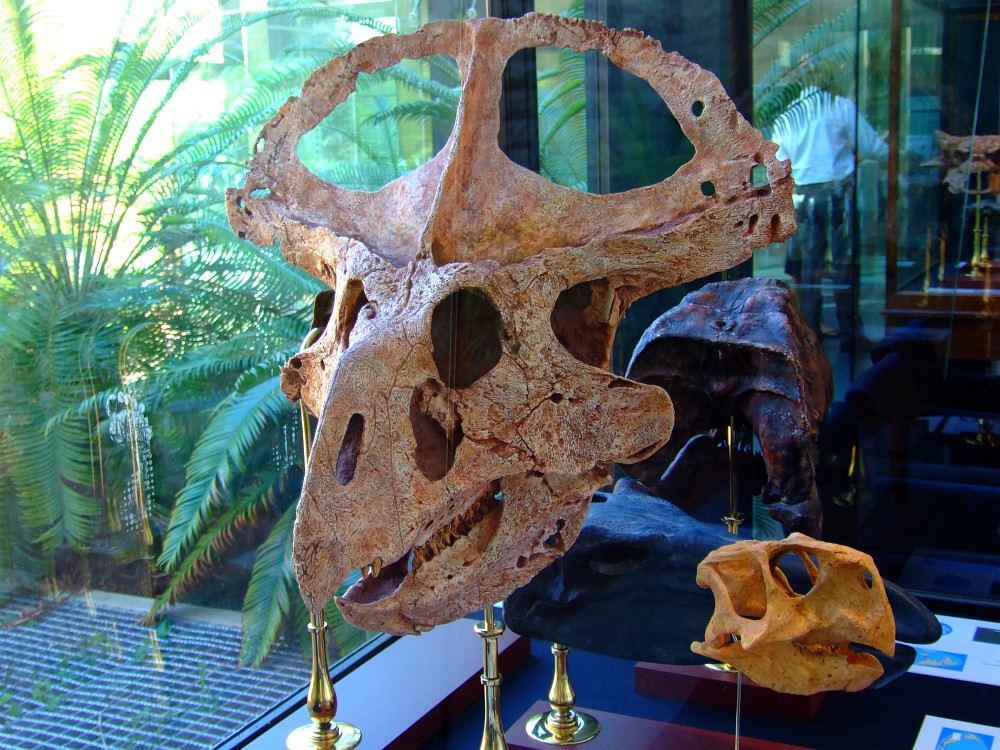
Palaeontology week at the South Australian Museum of Natural History offered some fantastic opportunities to pit oneself against a slippery opponent: glass. The exhibits are all behind (or under) glass, of course ... and it's daylight, which means that trying to get a good photo of an amazing fossil entails finding some way to get the "glare" out of the shot! You can find yourself taking an excellent portrait -- of the photographer, reflected in the glass. There's no real trick to it, but there's a few guidelines to follow, if you're wondering how in the world to get a usable shot. First: observe. Use your eyes. Don't let your brain merely "tune out" the reflections -- see them! Second: use your feet and knees. Move around and duck down, till the reflections are either minimal, or gone. The camera might try to focus on the glass itself, so be vigilant ... make sure it focuses where you want it to. Lastly, the light levels will be low, so set your virtual film speed at 800 or higher, if you're working in Manual mode; and if you're working in Auto mode, take a great number of shots till the camera gives you exactly what you want -- and erase the dross! Photo by Mel, 2009. (Palaeontology Week, late March 2009; in the foyer of the SA Museum. The major skull in the case is Protoceratops.)

Saturday, February 21, 2009

Surf's up!

surf
Click here to view the whole image at 1000 pixels wide.

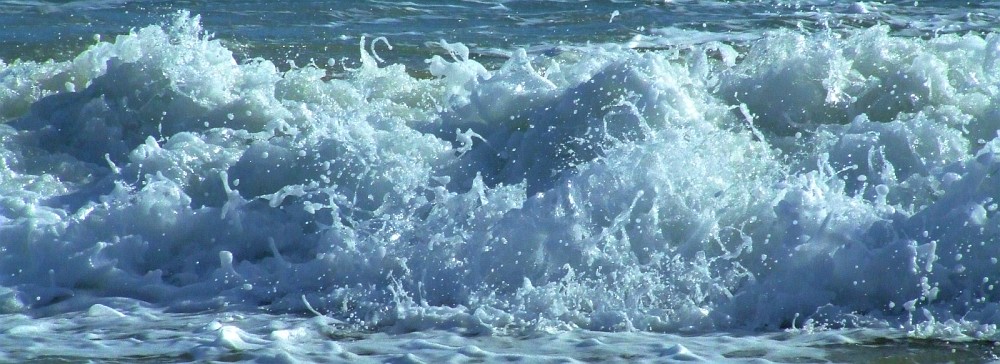
Surf's up ... well, either that or the meringue exploded! One day in the spring of2006 (the downunder spring -- September or October) massive winds raised some big waves off Noarlunga. I'd needed to get digital images from which a book cover could be constructed (the book is the aptly titled Storm Tide!) and we drove down to Noarlunga speedily, while the surf was pounding. This is a crop from the middle of a much larger frame, shot at the maximum telephoto range. The hardest thing about getting this picture was picking the right moment to trip the shutter. At the software level, later, the cropped-out image was enhanced for brightness, contrast and color saturation. Photo by Mel, 2006.

Strange life forms

tree-fungus
(You are viewing this image at full size, 600 pixels wide."

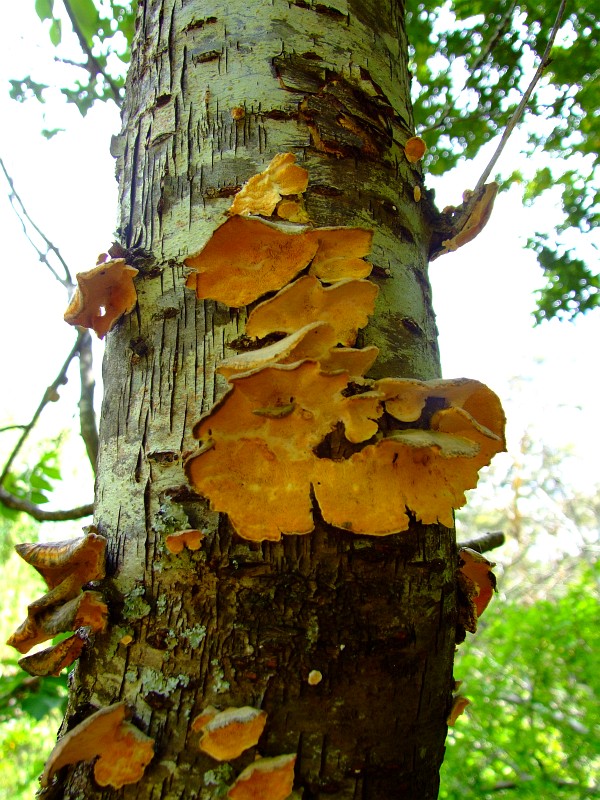
As the exploration of space begins, and humans begin to travel to planets that are earthlike but still very different, especially genetically, one might expect reports to come home of strange lifeforms, unanticipated and way out of the norm. But ... what's normal anyway? These are tree fungi, and life forms don't come much more weird! The picture is an exercise in capturing depth of field -- this being the amount of the image that's in focus between the lens plane and infinity. The trick is this: the smaller the aperture you can get, the greater the depth of field you can achieve. Now, in low light conditions (like this: the glade was dim and green), to get a small aperture and keep the exposure right, you'll have a long shutter speed. If it's too long to hold the camera steady (preventing camera shake, which blurs the image), see if you can sit the camera on a level surface ... because you'll never have a tripod with you when you need one! Photo by Mel, 2008.

Tuesday, February 17, 2009

Ponies on a winter's afternoon

dales-ponies
Click here to view the entire image at 1000 pixels wide.

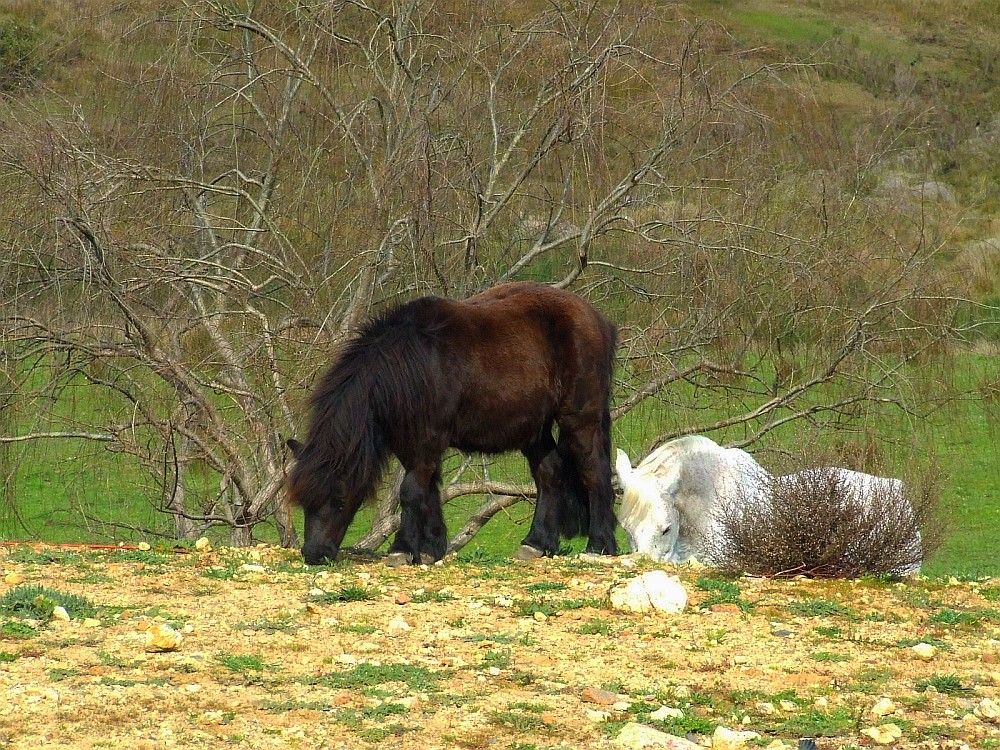
On the road to Victor Harbour (South Australia) you'll pass many horse properties and not a few breeders. One of the most interesting and unusual sights is the dales ponies grazing in paddocks along the highway -- small, incredibly hardy ponies which are at home in the merciless winters of the northern hemisphere. Their winter coats grow in shaggy, to protect them from cold, wind, frost and snow ... although in Australia they won't have to endure much of that! This picture was oddly difficult to capture. The lighting conditions were deeply overcast on this winter's day, and the raw image was flat, murky, absolutely colorless. To get this result, I've used software to "tweak" the brightness and contrast, resaturate the color, and also sharpen the overall frame. To get good results on the darker pony, technically, I've tweaked the contrast too far: notice that the face of the white pony, and the rock, are actually burned out. To render this image fully "publication quality," I'd need to go in and correct those areas, adding color and detail from the original (flat!) image. But it's still a very nice picture as it stands, so -- here it is. Photo by Jade, 2006.

Saturday, February 14, 2009

As through a glass...

reflections-2
(You're viewing the whole image, at 600 pixels wide)

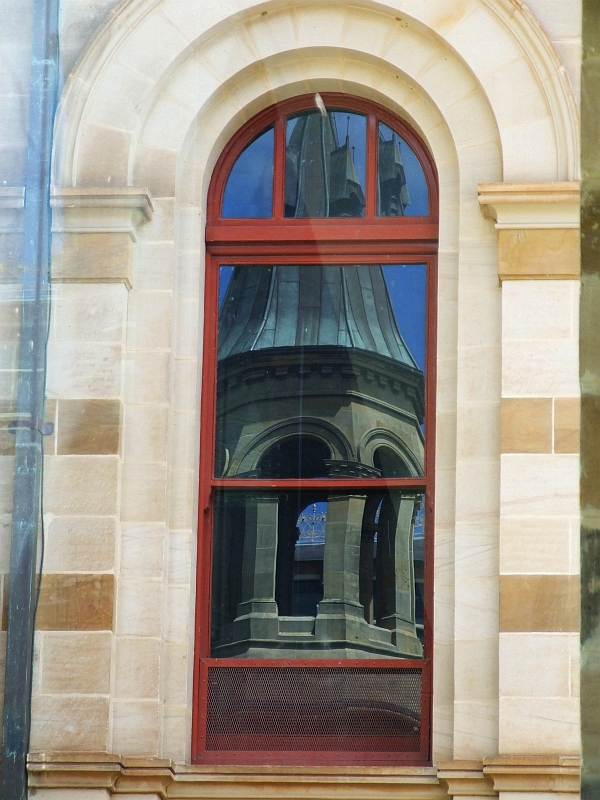
Reflection fascinates me: a world contained within a world, with the possibilily of "infinite regression" between two mirror-like surfaces. Images framed within images. The slight bevel in some of the panes of glass in this window prevent the illusion from being absolutely arresting, but you still get the "portal" effect that's so common a theme in Science Fiction and Fantasy. Imagine that you could step through the mirror...! The shot was easy to get; it was actually photographed through another pane of glass, from inside a bistro. Because of the second layer of glass between camera and subject, a little enhancement was done at the software level. Don't forget that every layer of glass stops about 15% of the light, so adjustments must be made. Fortunately, in digital photography this is so easy. Photo by Mel, 2007.

Tuesday, February 10, 2009

Timeless

columns
Click here to view the entire image at 1000 pixels wide.

The architecture is pretending it's an era in which chariots were rolling down the Via Apia and Caesar was toying with the notion of invading Gaul (if the weather was fine for it). 50BC? No! 2008, on North Terrace ... Parliament House, Adelaide! The magic is in the cropping. Very few "raw shots" are ever perfect, and the beauty of digital photography is that you're not locked into the old frame. As a professional photographer shooting 35mm transparencies, I was always hyper-aware of what was in the edges and corners of the shot. You can frame the perfect image of a building, statue, fountain, whatever ... but that garbage bin in the bottom of the shot, the overhanging eaves in the top -- the ice cream cone that was just waved into your angle of view by the kid who's been trying to jump into the shot, making faces ...! Working digitally, you can crop what you want and, using trustworthy software you can resize the image without loss of quality. Photo by Mel, 2008.

Sunday, February 8, 2009

Like a fire in the sky

sunset-clouds-02
Click here to view the whole image at 1000 pixels wide.

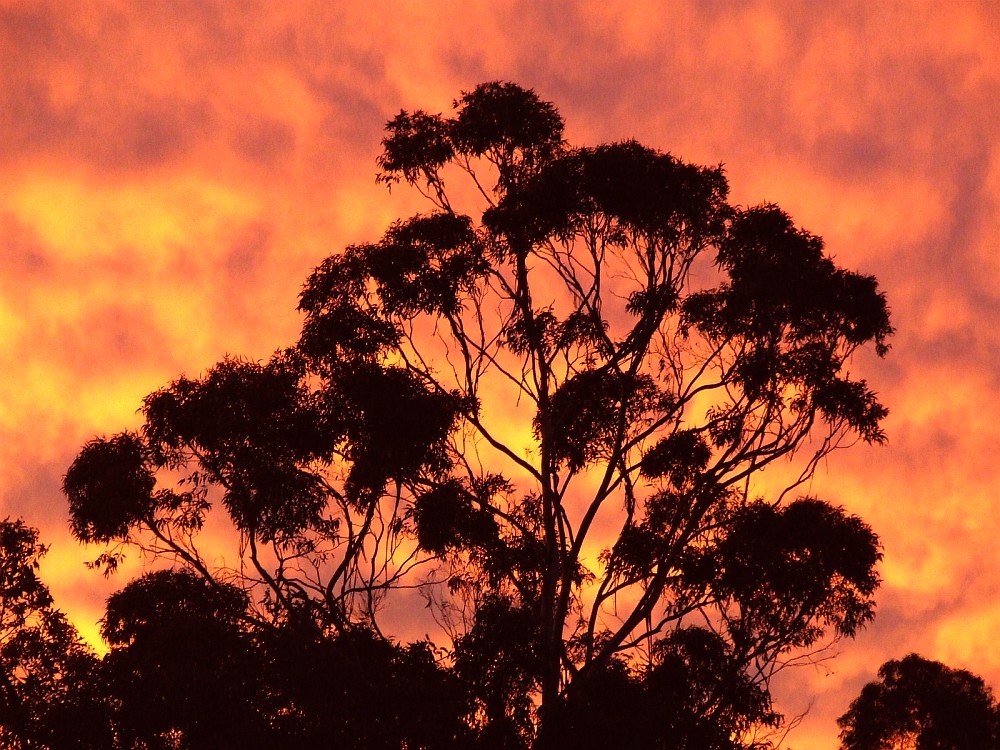
My brother said, "Grab the camera and get outside, NOW!" He'd seen this sunset brightening, shade by shade, and he knew how I love to capture sunset shots. I started doing this kind of work in optical cameras, and the switch to digital was not so easy. The digitals love to "correct" your exposure, if/when you leave them on their automatic settings ... and your sunset colors (or other effects) vanish. They just switch right back to normal, ordinary shots that look, well, blah. You need to find the manual (M) settings, and learn how to adjust shutter speeds and apertures. These may be "virtual" on digital cameras, but the settings are shere; you just need to find them! The colors really looked like this. All I had to do was trim the shot to get the edge of a roof out of it, and then resize it. Photo by Jade, 2006.

Tuesday, February 3, 2009

A drought-scourged panorama

panorama
Click to see the whole image at 1000 pixels wide.

On a roasting day in summer, you've just jolted down the most horrific road in South Australia. You're not quite sure if your knee or shoulder joints are still attached, and if your kidneys are where they used to be! But the reward for making it down the road to Myponga Beach is glorious peace and quiet and a panoramic view from the ocean to what seems to be sub-desert but is in fact sheep grazing country that's being scourged by drought. Up on the hill is a station house ... and here's where it gets interesting. Refer back to Sand, sea and sun, Aussie style, which was uploaded a few days ago, and look at the top of the shot. There's the same house, seen in the distance, photographed from Silver Sands, near Aldinga ... and in the previous shot you can also see that horrific road down the hillside! That's what you drive in order to get to the location above. Dramatic though this shot is, it was also easy to get. I remember the day being so hot that I left the Fuju 6500 set on full auto and let the gadget do the work! Photo by Mel, 2007.
Quick Fix

Let's say you've taken a picture which would be GREAT. The focus is spot on, no camera jitters, beaut! Except for the fact you had to take the shot quickly (no time to go to manual settings on your wonderful digital camera), and the annoying fact that the sun was right in front of you.

Say, perhaps something like this:
DSCF5300


No worries though, cus in one or two mouse clicks it can look like this:
fixed


The fix is done using Irfanview, a free and awesome imaging program. All I did was turn the gamma from 1.00 to 1.48, the contrast from 0 to 25 and two clicks of sharpness (I set each click for a value of 2%).

You can do a lot with Irfanview, give it a go and experiment.

Photo and enhancement by dave.

The flowers of deep winter

red-flowering-tree
Click here to view at 1000 pixels wide.

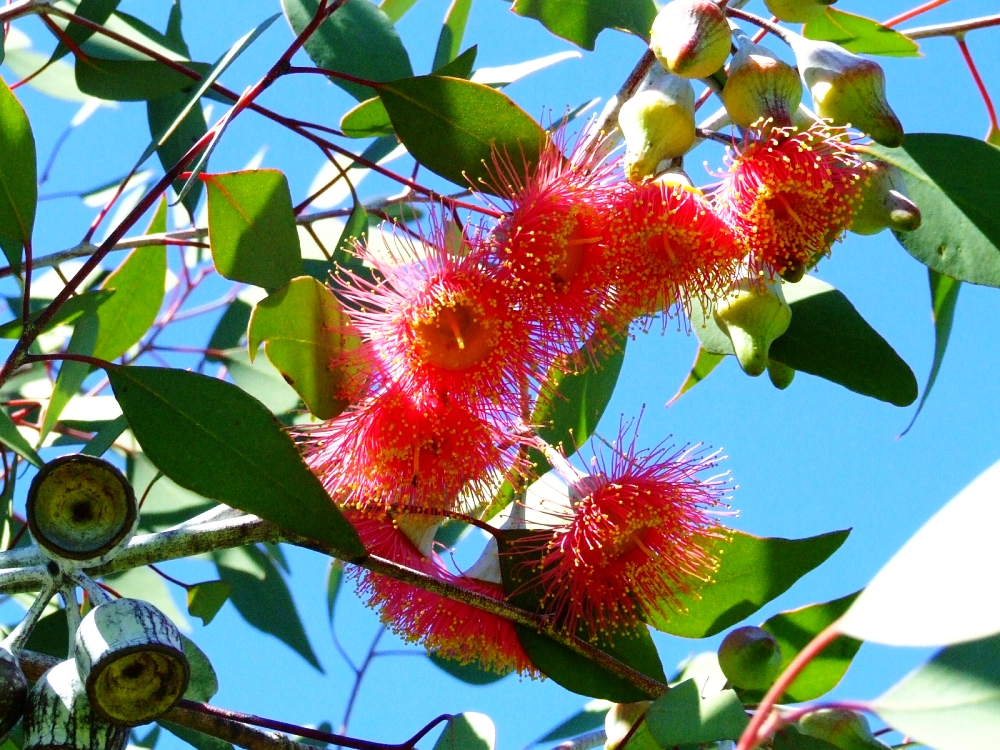
Living in the northern hemisphere, you'd be used to a cold, often icy winter in which nature lies dormant. Coming to the south, you experience the exact opposite -- and it can take a few years to grow accustomed to it. "Downunder," things come alive in winter, when the sun is less fierce, and it (gasp!) rains. Winter is the time of green, cool, flowering trees, flowering shrubs, flowering plants. If it can flower, between May and October -- it flowers! In this picture I've captured a closeup on eucalypt flowers ... "gum nuts." Massive trees will be covered with these, and you'll be amazed by the drone of bees. The most difficult aspect of getting this photo was to make sure the camera calculated its exposure on the flowers and nuts, not the sky. You can do this by shifting the camera around until a flower or nut is in the right place to influence the light meter ... or by setting the camera to its Manual (M) setting and experimenting till you get what you want. The beauty of digital cameras is, you can then delete all the setup shots and keep only the good ones, and it costs nothing! (Back in the days of optical cameras, we used to "bracket" exposures for difficult and important shots, and -- oh, it got expensive, with shots on transparency costing upwards of $1 each, in 1980!) Photo by Jade, 2006.

Monday, February 2, 2009

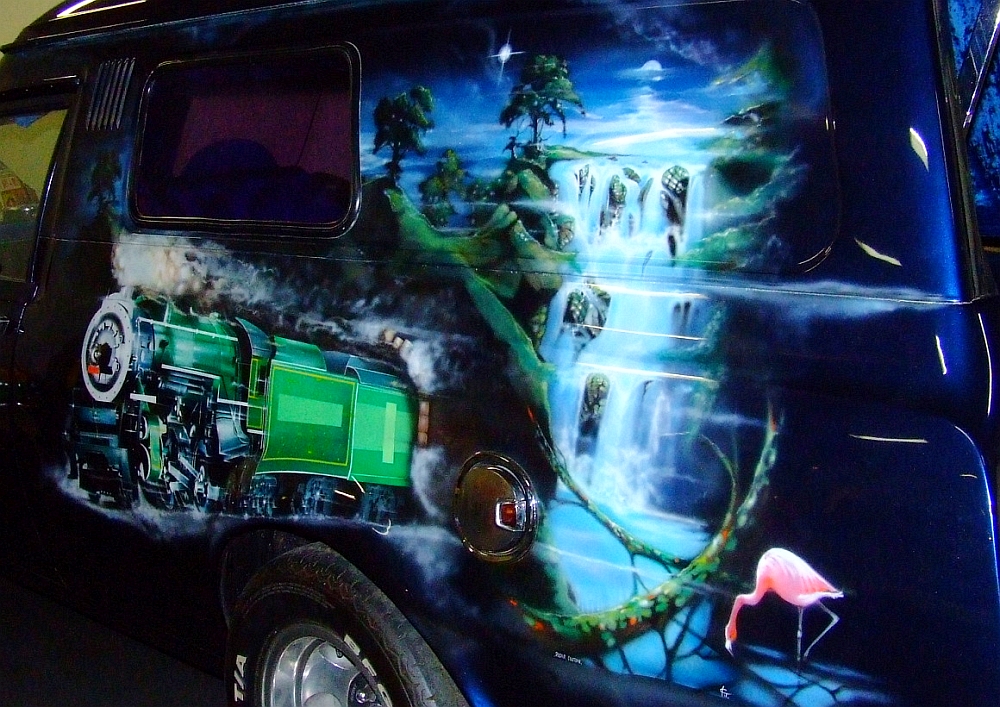
Mobile artwork

mobile-artwork
Click here to see the entire image at 1000 pixels wide.

Getting this picture was an absolute nightmare, because the vehicle is standing in lighting conditions which are virtually dark. It's a 1970s panel van -- they were tremendously popular with late teens and early twenties in those days; you'd see them on the beach. Now? The best specimens are in museums! This one is in the National Motor Museum, in Birdwood, South Australia. It's a beauty ... the airbrush art is classic. Brings back a lot of memories! But getting the photo was a major headache, because it was so dark. If you popped the flash, everything would be a mass of glare, with glass and chrome reflecting like mirrors. The answer? A long exposure. When you're walking around a museum, you don't go armed with a tripod! Photography is welcome there, but I think they'd draw the line at people fronting up with a load of professional gear. The solution was to sit the camera on the hood (or bonnet, if you're an Aussie) of a nearby vehicle and trip the shutter gently. The photo still needed a bit of digital enhancement ... but here it is! Photo by Mel, 2006.

Wednesday, January 21, 2009

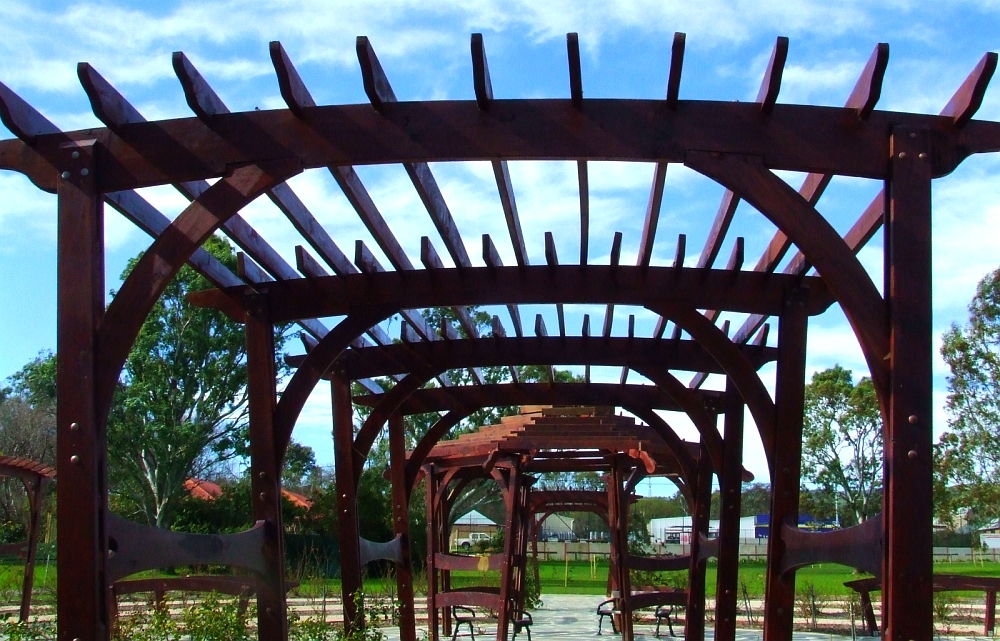
Winter in the rose garden at Willunga

willunga-rose-garden-winter
You're viewing part of this image. Click here to view the whole picture.

The magic of the computer and of Irfanview, particularly) are at work in this picture. It was a winter's day ... cold, quite cloudy, windy, dull, with rain in patches. Yet you'd think this was a summer's day, from the contrast and color saturation! The tip-off that tells you it's winter is way over on the left: there's one deciduous tree in the image ... and it's skeletal, not a leaf on it. The rest are various kinds of Australian gum trees, which don't drop their foliage in winter -- in fact, they shred their bark in summer! This is the rose garden at Willunga, though the roses had just been given a hard prune when this pictue was taken: cut back your roses this way and it's ten weeks to a riot of new blooms! Photo by Jade, 2007.

Monday, January 19, 2009

Still life, with wine casks

wine-barrels
Click here to view at full size.

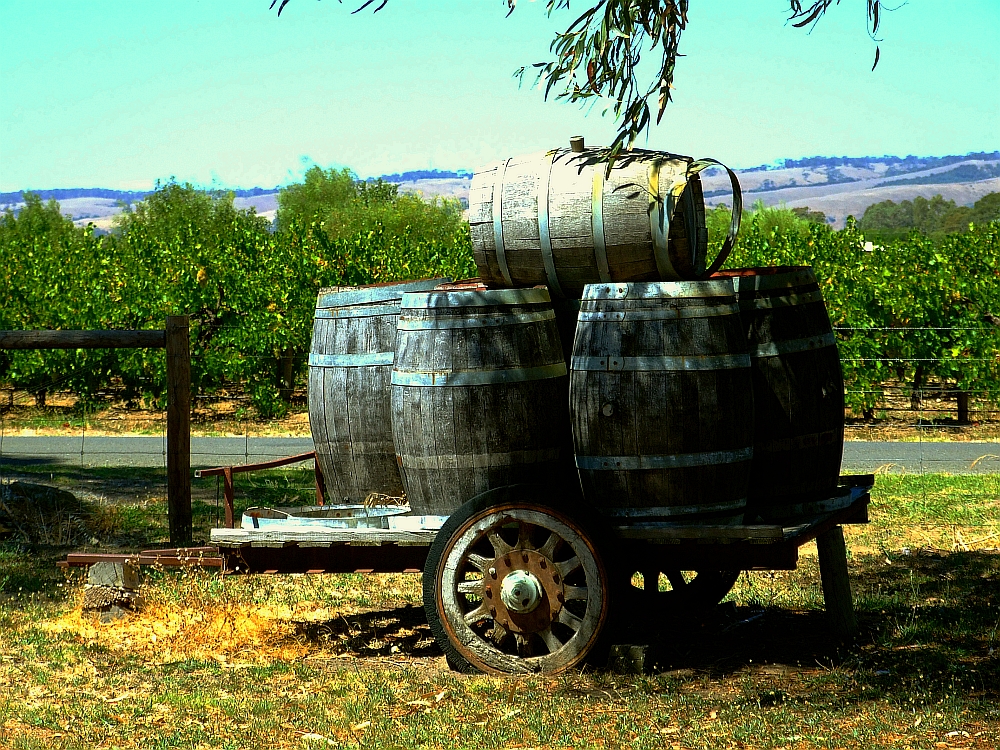
Here's a taste of history, standing at the entry to a carpark in McLaren Vale ... those wine barrels could be fifty year sold -- or older! "Life meets art" here, too. The photo has been profoundly enhanced to produce an affect almost like a painting. The original photo was captured with the Fuji S6500fd ... and was flat, without much color, and "washed out" by the lighting conditions. At the software level, the contrast was flattened, the color was resaturated, the whole image was darkened, and then sharpened to the point where it takes on the "art" look. Photo by Mel, 2007.
Thursday, January 15, 2009

On the inside, looking out

inside-looking-out
Click here to view at 1000 pixels wide.

We're back at Grant Burge estates, the winery in the Barossa ... I've uploaded two shots already from this shoot, and here's the third which should put the whole thing in perspective. See Life Meets Art... and also Symmetry, and you'll have the whole picture! The first shot was taken in, and features, the inside of the courtyard, under the vines -- sheltering from ferocious heat. The second shot was captured out in the gardens, looking back at the astonishing symmetry of the architecture. This shot is looking out into those gardens from the high, arched -- glassless -- windows you saw in picture two. The exposure was tricky: the challenge was to make a digital camera give you the aperture and shutter speed you need to correctly expose the outside, not the inside! (As I've said before, a little theory of photography goes a long way indeed.) The camera was one of the Fujis. I think, probably the 5500. Photo by Jade, 2007.

Saturday, January 10, 2009

Lorikeets: breakfast for two, please!

Click on the pic to view at large size.

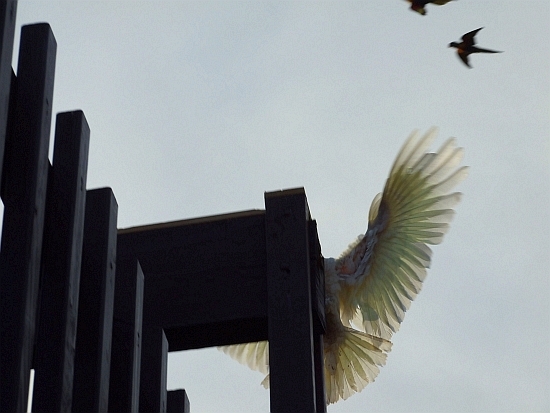
Every morning, flocks of Australian parrots show up for breakfast at my bird feeders. I get cockatoos, lorikeets, galahs, little corellas, the occasional long billed corella ... plus the usual turtle doves, native crested pigeons, magpie larks, honey eaters, wattle birds, sometimes a wagtail, and a couple of kind of ducks will make a splashdown in the pool. The morning light is a great opportunity for picture-taking, and lorikeets are so photogenic. They're so colorful. You need to be quick with the camera, and digital cameras don't do this kind of photography so well on automatics. You're better off if you go to manual exposure and manual focus. The shot above was pre-focused on the swinging feeder, and to get the perfect exposure on the birds, a few test-frames were taken. You need a fast shutter speed to capture these little buggers: they're quick and they don't stay still for long! Photo by Dave, 2008.

The church of many cockatoos

Strathalbyn-church
Click here to view at 1000 pixels wide.

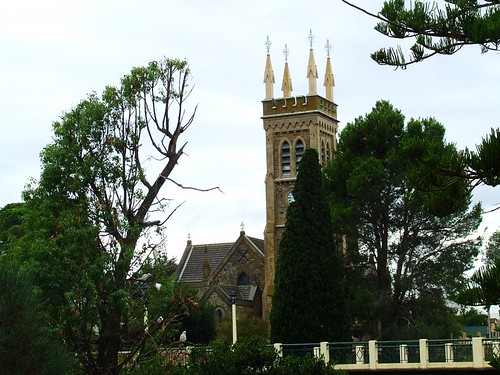
Church architecture is the same, the world over. Australia was colonized by people from every part of the British Isles. They brought so many things with them -- plants, animals, fashions in clothing and architecture -- that sometimes, in South Australia, you could almost think you were in an English village. Almost. This church is in the country town of Strathalbyn, and is so familiar, with its square tower ... but you know you're not in England. See the big white birds sitting on the gate and in the tree at lower left of the shot? Cockatoos. Thousands of these parrots nest in Strathalbyn, along the river which runs through the park in the middle of the town. Conditions on this day in 2007 were very dim; temperature was ambient to cool, with an thick overcast. This made it difficult to get good, sharp pictures, since apertures were large and shutter speeds correspondingly long. (A little photographic theory goes a long way, and most of what you learned in optical photography is applicable to digital cameras!) Photo by Jade, 2007.

Friday, January 9, 2009

Life meets art in the Barossa heat

world-of-light-and-shade
Click here to view at 1000 pixels wide.

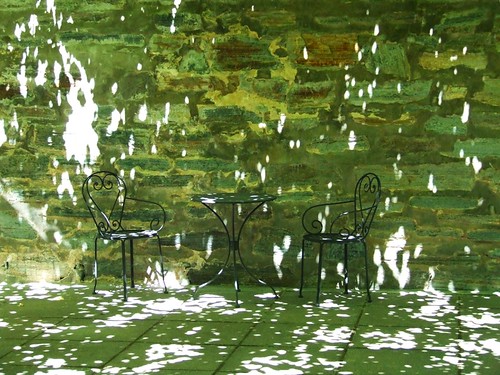
You would think it was a painting or screen print, at first glance -- but I assure you, it's a photo! I love walking the line where art and photography blur into each other (being an artist first and photographer second, I'm always fascinated by the way life definitely imitates art when given the slightest opportunity). This photo was taken "under the vines" in the courtyard at the year of the Barossa winery, Grant Burge Estates, late in 2006. I remember that the exposure was very tricky, and was done manually; the photo was also tweaked a little using Irfanview, to get the most out of it. Conditions were extremely hot and dry; outside, the light was blindingly bright. The vines offered a little respite -- and this astonishing pattern of light and shade. Photo by Jade, 2006.